Sewage Cleanup Nashville: Safe Removal of a Category 3 Backup
Sewage cleanup in Nashville is the job nobody can treat like a plumbing leak. What comes up through a toilet, a floor drain or a basement cleanout is category 3 water, loaded with bacteria and viruses, and it changes the rules for everything it touches: protective gear from the first minute, porous materials out rather than cleaned, and disinfection measured in process, not in air freshener. This page explains how a proper sewage cleanup runs, what has to come out of your home, and how to keep your family safe while it happens.
- Protective gear and containment
- Contaminated material removed, not covered up
- Independent local providers
- Open 24 hours, every day
Why sewage is a biohazard, not a spill
A sewage backup is category 3 water, the most contaminated class, carrying bacteria and viruses from the drain system. Safe cleanup means protective gear, containment, removal of every porous material the sewage touched, and disinfection of the hard surfaces that remain. It is not a job for a mop, gloves and household bleach.
The category system exists because water is not just water. Category 1 comes from a clean supply line. Category 2 carries some contamination. Category 3 is grossly contaminated: toilet discharge, sewer line backups, septic overflows and rising flood water all land here. With category 3, the question is never only how to dry the room. It is what the water brought with it, where it soaked in, and what has to leave the house before the room is healthy again. That is also why the work belongs inside water damage restoration in Nashville as its own specialty page, with its own rules, rather than as a line item on a general cleanup.
How a sewage cleanup Nashville job runs, step by step
Protect and assess
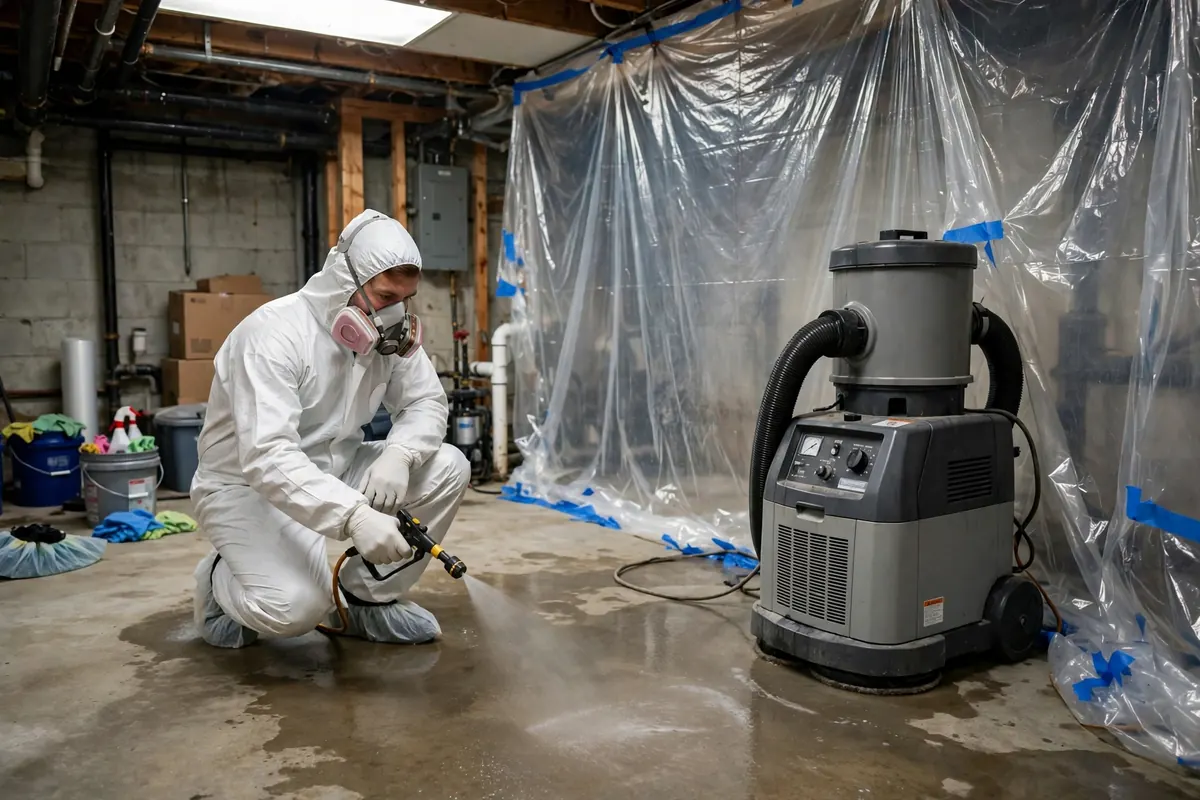
The crew suits up before they step in: respirators, suits, gloves and boots. Occupants and pets are moved out of the affected area, and the crew maps exactly where the sewage reached, including inside wall bases and under flooring.
Contain
Plastic containment and negative air pressure keep contaminated dust and aerosols from travelling into clean rooms while work goes on. HVAC systems serving the area are shut down or sealed off so the house does not spread the problem itself.
Remove
Standing sewage is pumped and extracted, and every porous material it soaked comes out: carpet, pad, drywall sections, insulation, upholstery. Removed material is bagged and disposed of as contaminated waste, not household trash.
Disinfect and dry
Hard surfaces that remain (concrete, tile, framing, fixtures) are cleaned and treated with professional disinfectant, then the structure is dried and metered like any water job. Only then does rebuild begin.
What has to come out
- Carpet and pad anywhere the sewage reached. They cannot be disinfected reliably, and no honest crew will offer to save them.
- Drywall and insulation up to above the wick line. Sewage climbs drywall by capillary action, so the cut goes higher than the visible stain.
- Upholstered furniture, mattresses and soft goods that were in contact. Solid wood and metal furniture can usually be cleaned and disinfected.
- Particleboard cabinets and vanities that swelled or soaked at the base. The material disintegrates and holds contamination in its core.
What can usually stay
Tile and sealed stone, concrete, porcelain fixtures, metal and glass, and solid structural framing all take professional cleaning and disinfection well, because the contamination sits on the surface rather than inside the material. The line between the two lists is porosity, and it is not negotiable: if sewage got inside it, it comes out. After removal and disinfection, the room is dried and metered exactly like the jobs on our water extraction page, because a disinfected room that stays damp is a mold problem waiting its turn.
Why Nashville homes back up
The cleanup crew handles the house. Knowing the cause is what stops it happening twice, and Nashville has its own patterns.
Tree roots in older lines
The classic East Nashville and Germantown backup: old clay sewer laterals, tree roots working into the joints, and a line that narrows for years before it blocks completely during a heavy rain. A camera inspection after cleanup tells you if the line itself needs repair or replacement.
Lines overwhelmed by rain
With about 49 inches of rain a year, Nashville storms push huge volumes through aging systems. Cracked lines take in groundwater, sump and foundation drains add load, and the lowest fixture in the house is where the system gives up. Basements and ground floor bathrooms take the hit first.
Septic at the county edges
Homes toward the edges of Davidson County and into the surrounding communities may run on septic rather than city sewer. A full tank, a failed drain field or a saturated field after days of rain sends the backup back into the house the same way, and the fix list includes the septic system itself.
Keeping your family safe during the job
Keep children, older relatives, anyone with asthma or a weakened immune system, and all pets out of the affected rooms until the provider says the rooms are clean and dry. Do not handle contaminated items with bare hands, do not use a household fan to air the room out (it spreads aerosols), and wash anything that contacted the area before it goes back into use. Shoes worn in the affected room should stay in the affected room.
When to stay somewhere else
If the backup took out your only bathroom, spread across sleeping areas, or reached the HVAC system, sleeping elsewhere for a night or two is the sensible call, and for a covered loss that cost may sit inside your policy's additional living expense cover. A single contained bathroom backup with another bathroom available is usually a stay-home job. Your provider should tell you plainly which case yours is before work starts, and the emergency route runs around the clock: emergency sewage cleanup Nashville requests are read at any hour, and our sewage cleanup Nashville-Davidson County coverage spans the full service area.
Common questions about sewage cleanup
Can I clean up a sewage backup myself?
A few cupfuls at a toilet base on tile, contained and cleaned up right away with gloves and disinfectant, is about the limit of a safe DIY job. Anything that spread across a floor, soaked into carpet or drywall, or came up through a floor drain is category 3 exposure: bacteria, viruses and parasites in material you cannot disinfect. Without protective gear, containment and proper disposal, DIY cleanup mostly spreads contamination and leaves the porous material, which is the real problem, in place.
Does carpet have to be replaced after a sewage backup?
Yes, in almost every case. Carpet and pad are porous, and sewage that has soaked into them cannot be reliably disinfected; the standard practice is removal and disposal. The same applies to soaked drywall sections, insulation and upholstered furniture. Hard, non-porous surfaces are a different story: tile, sealed concrete, porcelain and metal can be cleaned and disinfected in place. A crew that offers to shampoo sewage out of a carpet and leave it is cutting the corner that matters most.
How long until the room is safe to use again?
The cleanup itself usually runs one to three days depending on how much material comes out, followed by drying. A room is safe to use when contaminated material has been removed, hard surfaces have been cleaned and disinfected, and the structure reads dry on a meter. Airing a room out is not the finish line; smell fading is not the same as the room being clean. Your provider should be able to walk you through what was removed, what was disinfected and what the final readings were.
Will insurance cover sewage cleanup?
Often only if your policy carries a sewer or drain backup endorsement, which many policies sell as a small add-on rather than including it. A backup caused by a sudden blockage in your own line is treated differently from city sewer flooding, and gradual root intrusion can be argued as maintenance. Photograph everything before cleanup, keep the plumber's findings about the cause, and call the insurer early. Policies differ, so treat this as the general pattern and check your own declarations page.
What should I do first when sewage backs up into the house?
Stop using water anywhere in the house: no flushing, no drains, no washing machine, since every gallon you send down can come back up. Keep people and pets out of the affected rooms, turn off HVAC if vents or returns are near the spill so contaminated air is not spread, and do not run a fan across the area. Photograph it for insurance, then call for cleanup and a plumber in parallel: the cleanup crew handles the house, the plumber handles the cause, and you need both.
Does the smell ever fully go away?
Yes, when the source material is gone. Sewage smell lives in the porous material the sewage soaked into: pad, drywall, insulation, subfloor seams. Remove that material, disinfect the hard structure, dry it fully, and the smell goes with it. Lingering odor after a cleanup almost always means something contaminated was left behind, most often a section of subfloor or the bottom of a wall cavity. Odor sprays and fogging cover the symptom; they do not fix the cause.
A backup does not get safer while you wait.
Keep everyone out of the affected rooms, stop running water, and reach out now. A local provider handles the removal, disinfection and drying, and tells you what your home needs in writing.
Get Help Now