Basement Water Damage Nashville, Pumped Out and Dried Properly
The smell reaches the top of the stairs before the water is seen. Basement water damage Nashville homeowners deal with usually starts quietly: a sump pump that died in the night, rain pushing through the foundation, a water heater letting go at 2 a.m. The water collects in the lowest, coolest, slowest-drying room in the house, and the work is getting it out fast and then drying slowly and honestly. This page covers where the water comes from, what can be saved, and how this service connects you with independent local providers across Davidson County.
- Pumping and extraction, below grade
- Drying verified by moisture readings
- Honest drainage handoffs
- Independent local providers
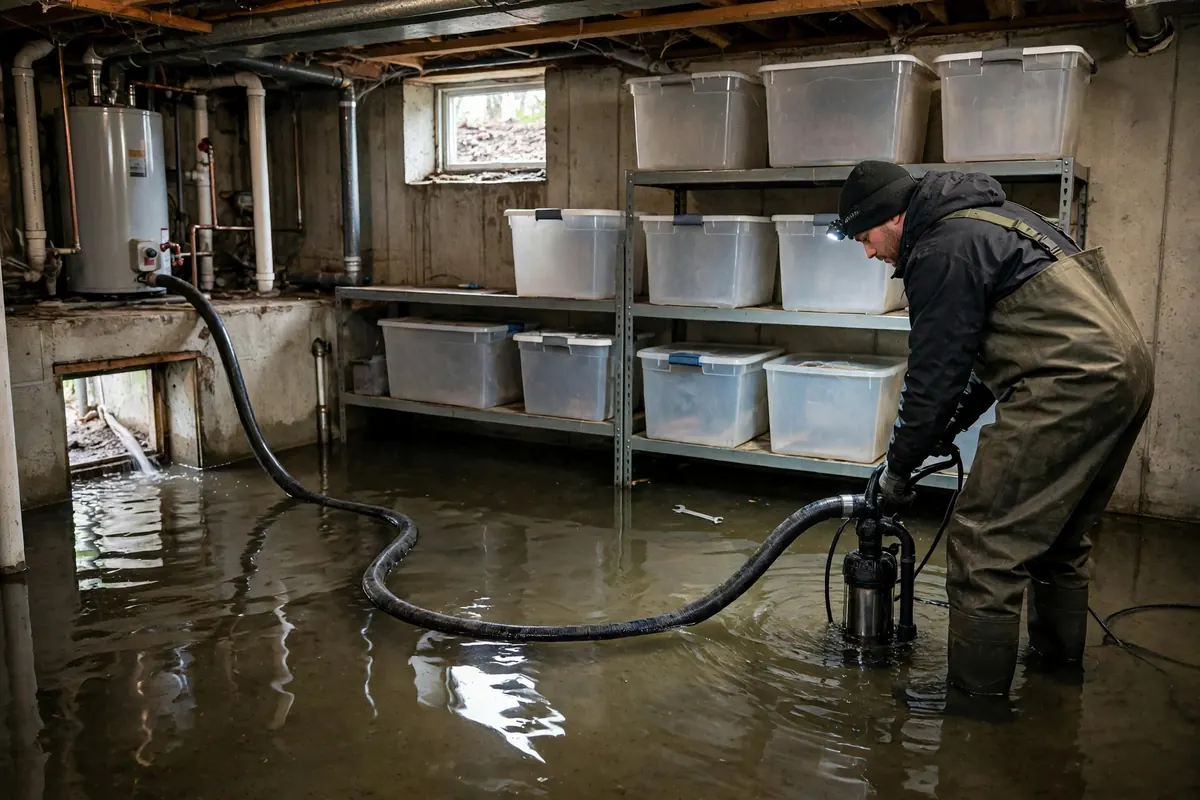
Basement water damage Nashville: out fast, dried slowly
Basement water damage in Nashville usually starts with a failed sump pump, seepage through the foundation, or a plumbing failure upstairs. The fix is pumping and extraction first, then slow, metered drying: below-grade spaces hold moisture longer than any other part of the house, and closing walls early is how a basement job fails.
Basement water removal Nashville providers perform looks simple from the stairs: pump the water, run the fans. The part that decides the outcome is less visible. Concrete and block store water and release it for days. Wall cavities in a finished basement hide their moisture behind painted drywall. A floor that feels dry on day two can sit over a slab that is still pushing damp into the framing. That is why the pages below treat the pumping as the beginning of the job, and the readings as the end of it.
Five ways water gets into a Nashville basement
The source decides everything downstream: how dirty the water is, whether insurance is in the conversation, and whether the fix is a pump, a plumber or a drainage crew. Nashville basements sit in Tennessee clay, and clay holds water against foundation walls after every heavy rain. With about 49 inches of rain a year, the soil against a basement wall is wet more often than it is dry, and the wall and floor joint is the seam that gives first.
The split-level and basement homes of Antioch, Hermitage and Donelson sit half below grade on the downhill side, so their lower floors collect what the lot sheds. Older full basements in East Nashville pair aging plumbing above with old drain tile below. A flooded basement Nashville call in March is usually rain and seepage; the same call in January is usually a pipe or a water heater. Both end in the same room, but they are different jobs and different claims.
- Sump pump failure. The pump dies, the power cuts in a storm, or the pit inflow beats the pump, and the lowest room fills quietly overnight.
- Seepage at the wall and floor joint. Groundwater in saturated clay pushes through the cove joint and through block walls after heavy rain. Slow, recurring, and rarely an insurance event.
- Foundation cracks. Settling opens paths through poured and block walls. A crack that weeps in spring storms is a crack that floods in a stalled summer storm.
- Water heater failure. A heater in a basement closet can release its full tank, and keep being fed, until someone finds it. Fifty gallons is a basement event on its own.
- Plumbing from above. A slow supply or drain leak in the floor system drips into the basement ceiling and walls, sometimes for weeks before the stain or the smell gives it away.
- Nashville
- Madison
- Donelson
- Antioch
- Bellevue
- East Nashville
- Hermitage
- Brentwood
- Goodlettsville
- Hendersonville
- Mount Juliet
- Smyrna
- La Vergne
- Franklin
- Berry Hill
Pumping and extracting a below-grade space
Make it safe
Power to flooded circuits stays off until it is checked, and nobody works in standing water near outlets or appliances. A water heater that went under is not relit until it is inspected.
Document the source
The entry point is photographed and noted before pumping: failed pump, joint seepage, burst line. That record carries the insurance conversation, because the path the water took decides the claim.
Pump and extract
Standing water is pumped out and the remainder extracted from flooring and carpet, the same trade as our water extraction and mitigation work, run from a space with one stairway for access.
Triage the contents
Contents are sorted while the space is open: what dries, what cleans, what is photographed and released. Nothing is thrown out before it is on the inventory.
Dry the structure
Dehumidification sized for a below-grade space, air movement, and daily readings on walls, floor and framing, the metered process on our structural drying page.
Name the fix
The scope ends with the entry path addressed or honestly handed off: a pump replaced, a crack noted for repair, a seepage path referred to drainage work.
Storage rules after a basement dries
- Store in sealed plastic bins, not cardboard. Cardboard wicks damp from a basement floor and feeds on itself.
- Keep storage off the floor on shelving or pallets, and a few inches off the walls, so a small leak shows before it soaks a row of boxes.
- Nothing irreplaceable at floor level in the lowest room. Photographs, documents and keepsakes live upstairs or in sealed bins on high shelves.
- Check the sump pump twice a year and pour water in the pit to watch it run. The cheapest basement flood is the one the pump prevents.
Finished and unfinished basements dry differently
Unfinished basements
Bare concrete, block walls and exposed joists are the honest version of this job. There is little to demolish, hard surfaces clean well, and the moisture is visible to a meter wherever it sits. The work is extraction, cleaning, and drying the structure and the contents, and the bigger question is the entry path, because unfinished basements are where seepage shows itself plainly.
Finished basements
Drywall, carpet and built-ins turn the same water into a set of material decisions. Water in basement Nashville finished rooms travels up the back of drywall well above the visible line, so baseboards come off and cavities are metered before anyone quotes. Carpet and pad that stood in seepage water usually come out; carpet hit briefly by clean water can sometimes be extracted and dried. The rebuild after drying is a separate scope, and a quote that blends the two into one number deserves a second look.
- Usually dries in place. Concrete floors, block and poured walls, metal shelving, sealed stone, and framing that readings show drying on schedule.
- Usually removed. Carpet padding, soaked drywall sections, wet insulation inside finished walls, swollen particleboard, and cardboard storage that sat in the water.
- Judged piece by piece. Carpet, hardwood, upholstered furniture and appliances. Drying cost is weighed against value, and anything released is photographed and listed first.
- Always addressed. The entry path. A basement scope that does not name where the water came from is a scope for doing this job again next spring.
When the fix is drainage, not another cleanup
What cleanup can and cannot do
Cleanup removes the water and dries the house. It does not lower the water table, regrade a lot, or move the water that clay soil holds against your foundation. When the entry path is seepage from grading that slopes toward the house, downspouts dumping at the foundation, or gutters overflowing at the wall, the lasting fix belongs to drainage and grading work. A provider who dries your basement and tells you so, in writing, is saving you a second cleanup. A provider who sells you a second cleanup without naming the path is not.
How this differs from storm flooding
A basement event is usually water arriving from inside or underneath one house: a pump, a pipe, a seam in the foundation. A storm flood is rising water arriving from outside, carrying silt and contamination across whole streets, and it follows different safety and disposal rules. If your water came over the yard and through the doors during a storm, the flood cleanup page is the one that matches your situation. If it came up through the floor or out of a closet in the basement, you are in the right place.
On the insurance side, sudden internal failures and rising water sit in different parts of a policy, and sump failure usually needs its own endorsement. For the cost side of a basement job, the published ranges and quote-reading method are on our restoration cost guide, and the full service starts from the water damage restoration Nashville homepage.
Common questions about basement water
How fast should water come out of a flooded basement?
The same day it is found, and within the first day or two at the outside. Standing water in a basement is not a stable situation: it wicks up drywall and framing, saturates insulation and contents, and the longer it sits the more material crosses the line from dryable to disposable. Pumping and extraction are the fast stages and they are the cheap stages. Every day of delay is paid for later in removed drywall, lost contents and longer drying, so the call should be made when the water is found, not after the weekend.
Can the drywall in a finished basement be saved?
Sometimes, and the readings decide. Drywall that took clean water briefly can often be dried in place with baseboards removed and air moved into the wall cavity, when moisture checks show it returning to dry levels. Drywall that stood in water for days, or took seepage carrying soil and silt, usually has its lower section cut out, because the paper facing and the gypsum core hold contamination and moisture the surface does not show. A provider who promises to save all of it, or to remove all of it, before taking readings is guessing in one direction or the other.
Does homeowners insurance cover a failed sump pump?
Only with the right endorsement. A standard homeowners policy usually excludes water that backs up through drains or overflows from a sump pit. Most insurers sell a water backup and sump overflow endorsement for a modest premium, and it is that endorsement, not the base policy, that pays when a pump dies in a storm. Water that arrives as seepage through the foundation is excluded more broadly still, as a maintenance and groundwater matter. The distinction that decides claims is the path the water took, which is why the provider's documentation of the entry point matters.
What should I throw away after water gets into the basement?
Photograph it first, then let it go: mattresses and upholstered furniture that sat in the water, cardboard boxes and their contents if they soaked through, carpet padding, and particleboard furniture that has swollen. Those materials cannot be reliably cleaned through their depth. Hard goods are a different story: metal, glass, sealed plastic and solid wood usually clean and dry well, and appliances can be assessed once the power question is settled by an electrician. Every discarded item goes on the inventory list with a photograph, which is what an insurance claim or an assistance application pays from.
How long does it take to dry a basement?
Longer than the rooms above it. A typical unfinished basement runs three to five days of active drying after extraction; a finished basement, or one that took water deep into wall cavities and under flooring, runs longer. Below-grade spaces fight the equipment: cool temperatures slow evaporation, concrete and block release stored moisture for days, and summer humidity is working against the dehumidifiers. Drying ends when moisture readings on the walls, floor and framing hold at normal levels across consecutive checks, not when the floor feels dry to a hand.
Will it happen again in the next storm?
If the entry path is unchanged, the honest answer is probably. A basement that took seepage through the wall and floor joint in one heavy rain will take it again in the next, because the clay soil, the grading and the water table have not changed. Pumps get replaced, but seepage is a drainage conversation: grading that slopes away from the house, downspouts carried well clear of the foundation, gutters that do not overflow at the wall, and in some lots an interior drain and sump system. A good provider will name the path in writing and tell you when the fix belongs to a drainage or waterproofing trade rather than another cleanup.
Water in the basement is a clock, not a puddle.
Every day it sits, more of the room crosses from dryable to disposable, and the drying underneath takes longer. Get it pumped, documented and drying in the right order. Reach out now and get connected with a local provider for basement flood cleanup Nashville homeowners can call on, anywhere in Davidson County.
Get Help Now