Burst Pipe Water Damage Nashville, and the First Hour That Decides the Cost
A supply line lets go and the clock starts. Burst pipe water damage Nashville homeowners face is decided less by the pipe than by the hour after it breaks: how fast the water stops, what gets documented, and whether the soaked structure gets extracted and dried in the right order. This page is that first hour written down, plus the split between the two trades every burst needs, and how this service connects you with independent local providers across Davidson County.
- Shutoff first, photos before cleanup
- Pipe repair and drying roles explained
- Documented for insurance claims
- Independent local providers
Burst pipe water damage Nashville: two trades, one clock
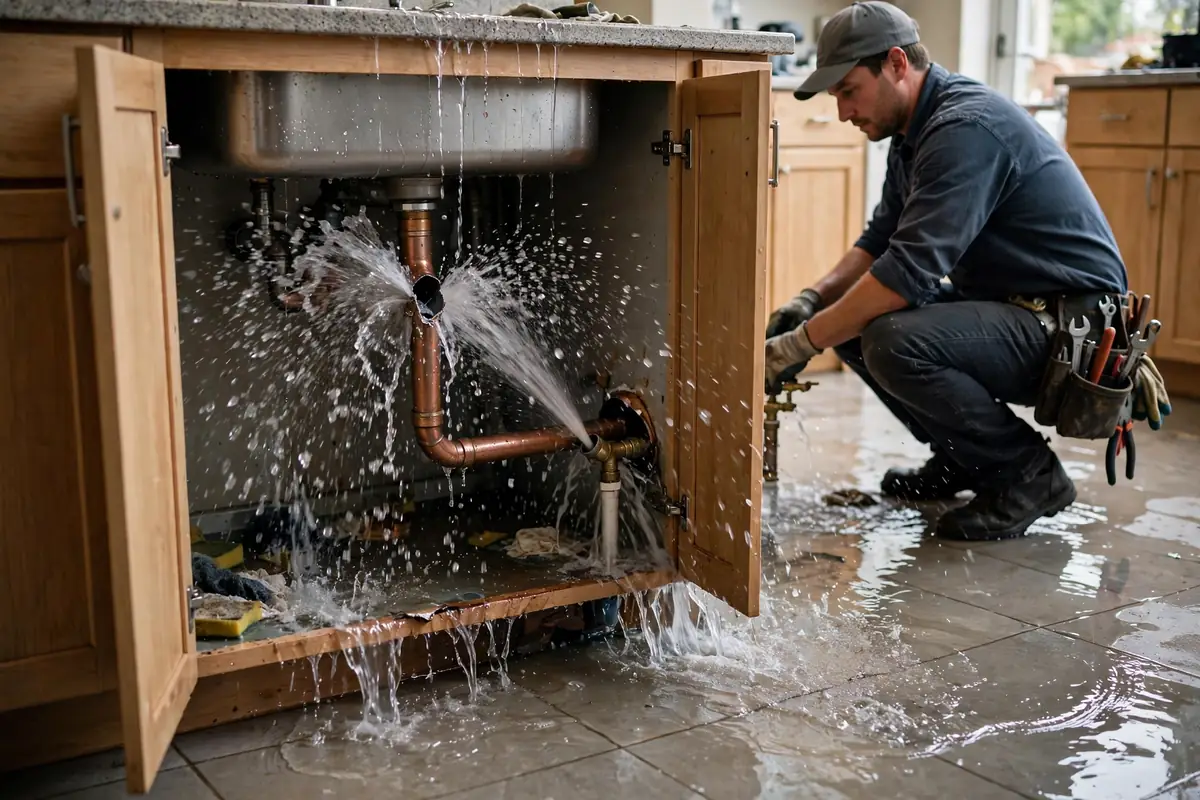
Burst pipe water damage in Nashville is a two-trade emergency. A plumber repairs the pipe; a restoration provider extracts the water, dries the structure and documents the damage for the claim. The first hour decides the outcome: shut off the main, kill power to wet areas, photograph everything, and start extraction the same day.
Homeowners lose the most ground in the first hour by doing the jobs in the wrong order: mopping before the main is shut off, cleaning before anything is photographed, waiting on a plumber while water sits in the walls. The checklist below is the order that protects the house and the claim at the same time. Burst pipe cleanup Nashville providers are called for usually starts within hours, not days, and the homes that come through cheapest are the ones where the water stopped early and the record started immediately.
Shut it down, document it, then make the two calls
Shut off the main
Find the main water shutoff, usually where the line enters the house or at the meter, and close it. Nothing else matters until the flow stops. If the break is on one fixture line, its local valve works, but the main is the sure stop.
Kill power to wet areas
If water is near outlets, appliances or the breaker panel, turn off power to those rooms at the panel and keep everyone out until it is safe. Water and household wiring do not mix, and a burst near a water heater closet is exactly that case.
Move what you can
Get furniture, rugs, boxes and electronics up and out of the water. Prop wet upholstered pieces where air can reach them. Contents moved in the first hour are usually contents saved; contents left standing in water usually are not.
Photograph everything
Video the break if it is still spraying, then photograph every wet room, the water line on the walls, and damaged items before anything is thrown out. This record is what the insurance claim is built on, and it cannot be recreated later.
Call the plumber for the pipe
The plumber finds the break, repairs or replaces the failed section, and restores your water service. Pipe burst in house Nashville calls follow this pattern every winter: the pipe itself is a plumbing job, full stop.
Call restoration for the structure
The restoration provider extracts the standing water, opens what needs opening, and dries the structure to metered readings. This is the work that decides whether the burst costs a drying bill or a rebuild.
The split, stated plainly
- The plumber fixes the pipe: the break, the line, the water service. Plumbers do not dry houses.
- The restoration provider fixes what the water did: extraction, drying, damaged materials, claim documentation.
- One call does not replace the other. A repaired pipe over a wet structure is a job half done.
- If a company offers to do both, ask which license covers which part of the work.
Cold snaps, crawl spaces and old galvanized lines
Nashville winters are mild on average and sharp at the edges. Most of the year pipes are in no danger at all, and then a cold snap drops temperatures into the teens or lower for two or three nights, and the frozen pipe water damage Nashville plumbers see all happens in the same week. Water expands as it freezes, and a line that freezes solid splits along its length or at a joint. The damage often announces itself at the thaw, when the ice clears and the split starts to pour.
The houses decide which pipes are exposed. The postwar brick ranches of Madison, Donelson and Antioch run their supply lines through vented crawl spaces, where cold air moves freely under the house on the coldest nights. Lines in exterior walls sit a few inches of insulation away from the same air. Older streets in East Nashville and Inglewood still carry galvanized lines that have been corroding from the inside for decades, thinner every year, and a hard freeze is often the last stress they take. Empty homes are the third pattern: a house sitting with the heat low or off while the owners travel has no warm air protecting any of its pipes, and a burst there can run for days before anyone sees it.
- Cold snaps, not cold winters. Nashville bursts cluster in short hard freezes. Pipes that survive twenty winters can split in one three night snap.
- Vented crawl spaces. Supply lines under the house sit in moving cold air. Crawl space runs are the most common freeze location in Davidson County homes.
- Exterior wall runs. Kitchen and bathroom lines in outside walls freeze where insulation is thin, especially on the north side of the house.
- Aging galvanized pipe. Corrosion narrows and weakens old lines from inside. Many bursts in older homes are the pipe failing, with the freeze as the final push.
- Nashville
- Madison
- Donelson
- Antioch
- Bellevue
- East Nashville
- Hermitage
- Brentwood
- Goodlettsville
- Hendersonville
- Mount Juliet
- Smyrna
- La Vergne
- Franklin
- Berry Hill
The three places a burst does the most damage
A burst in a crawl space supply line is the quiet catastrophe. Nothing shows inside the house at first, while water soaks the subfloor from below, saturates insulation, and wets the joists for days. Homeowners find it from a water bill, a soft spot in the floor, or the sound of running water in a quiet house. A burst in an upstairs bathroom is the loud one: water through the ceiling below, two floors of damage from one line. A burst at the water heater closet is the fast one, because the heater keeps feeding the line and the closet usually shares walls with finished rooms on both sides.
The cleanup sequence after the plumber has closed the break is the same in all three cases. Standing water comes out first, which is the work covered on our water extraction and mitigation page. Then the structure dries under air movers and dehumidifiers, the metered process set out on our structural drying page. What the water soaked decides what stays: hardwood and tile often dry and survive, framing dries in place, and drywall that stayed wet for days, soaked insulation, and swollen particleboard usually come out. The judgment is made on moisture readings and time wet, not on how a surface looks on the surface.
Extract
Standing and trapped water is pumped and vacuumed out, including from under flooring and out of the crawl space.
Open and remove
Baseboards, soaked drywall sections and wet insulation come out where readings say the water reached and stayed.
Dry to readings
Air movers and dehumidifiers run with daily moisture checks until wood, subfloor and wall cavities hold at dry levels.
Document and rebuild
The moisture record and photo file go to the claim, and patching, flooring and paint happen only on a dry structure.
A burst pipe is the classic covered event, if it is documented
What usually is covered
The water damage from a sudden burst: extraction, drying, damaged flooring, drywall and contents, when the loss is reported promptly and the damage is documented. Insurers call this sudden and accidental discharge, and a frozen or failed supply line is the textbook example. Your photo record from the first hour, plus the provider's moisture documentation, is what turns that wording into a paid claim.
What usually is not
The pipe itself is often treated as a maintenance item, so the plumber's repair bill may sit outside the claim even when everything the water touched is inside it. Damage from a slow leak that ran for months is a different argument entirely and is frequently denied as gradual. The line between the two is evidence: a burst has a date, a break, and a record. A leak that was left has a history.
General patterns, not advice about your own cover. For the cost side of a burst pipe job, the published ranges and quote-reading method are on our restoration cost guide, and the full service starts from the water damage restoration Nashville homepage.
Common questions about burst pipes
What do I do first when a pipe bursts?
Shut off the main water valve before anything else. A burst supply line can pour hundreds of gallons an hour into a home, and every minute of flow is more damage. Then turn off power to the wet areas at the breaker if water is near outlets or appliances, move what you can out of the water, and photograph everything before cleanup starts. Only then make the two calls: a plumber for the pipe, and a restoration provider for the water already in the structure.
Who fixes the pipe, a plumber or the restoration company?
The plumber, and the split matters. A plumber finds the break, repairs or replaces the line, and gets your water service back. A restoration provider handles everything the escaped water did: extraction, drying, damaged materials, and the moisture documentation your insurer will ask for. Restoration crews do not do plumbing work, and plumbers do not dry houses. Most burst pipe jobs need both trades, in that order, and a good provider will tell you plainly if the pipe repair has to come first.
How much damage can one burst pipe actually do?
More than most homeowners expect, because flow rate and discovery time multiply each other. A split supply line can release several hundred gallons an hour. A burst found in twenty minutes wets one room. A burst in an empty house over a weekend can soak flooring, drywall, insulation and the subfloor across several rooms, and water that reaches a crawl space keeps working from underneath. The damage is rarely the pipe. It is the hours the water ran, which is why the first hour matters so much.
Does homeowners insurance cover a burst pipe?
In most policies, yes. A burst pipe is the classic sudden and accidental event homeowners insurance is built around, and the resulting water damage is usually covered when the loss is reported and documented promptly. Two limits matter. The pipe repair itself, the plumber's part, is often excluded as a maintenance item even when the damage it caused is covered. And slow leaks are treated differently from bursts: damage from a pipe that seeped for months can be denied as gradual, which is one more reason to document the event the day it happens.
How long does drying take after a burst pipe?
Most burst pipe homes dry in three to five days once the water is extracted, with moisture readings confirming the structure is back to normal levels. A burst over a crawl space or into a wall cavity runs longer, because the wettest materials are hidden and dry slowest. Drying ends on readings, not on the calendar: flooring, wall cavities and subfloor are metered until they hold at dry levels. Rebuild, patching, flooring and paint, is a separate stage that starts after the dry sign-off.
How do I stop a pipe bursting again?
Insulate the pipes that run through the crawl space and exterior walls, because those are the runs that freeze in a Nashville cold snap. On the coldest nights, let faucets on exterior walls drip and open cabinet doors so warm room air reaches the pipes under sinks. Know where your main shutoff is before you need it. If the house will sit empty in winter, shut the water off at the main and drain the lines, or keep the heat on and have someone check the house. Older galvanized lines that have already corroded are a plumber's replacement conversation, not a restoration one.
The pipe is fixed. The house is still wet.
A repaired line stops new water. It does nothing for the water already in your floors, walls and crawl space, and that water sets the size of the final bill. Get the extraction and drying started today, and reach out now to get connected with a local provider who handles burst pipe work across Davidson County.
Get Help Now